For decades, the popular image of American wine country has been remarkably narrow: California sunshine, rolling vineyards, and perhaps a tasting room somewhere between Napa and Sonoma.
That version of the story is not wrong. It is simply incomplete.
American wine is also grown beside the Finger Lakes, across the high desert of New Mexico, among the forests and farmland of northern Michigan, in the limestone-rich hills of Central Texas, and above historic cellars in Missouri. Some of the country’s most interesting wineries are not merely places to sample a few pours. They are working farms, historic landmarks, restaurants, hotels, laboratories of sustainable agriculture, and gathering places built around the rituals of hospitality.
The following wineries are not ranked against one another. Each represents a different reason to travel: a remarkable setting, an important chapter in American winemaking, a distinctive regional style, or an experience that extends well beyond the tasting glass.
THE WEST
- RIDGE VINEYARDS — CUPERTINO, CALIFORNIA
Ridge’s Monte Bello estate sits high in the Santa Cruz Mountains, where vineyards rise between approximately 1,300 and 2,700 feet above sea level. Its combination of elevation, Pacific influence, and decomposed limestone distinguishes it from California’s better-known Cabernet regions.
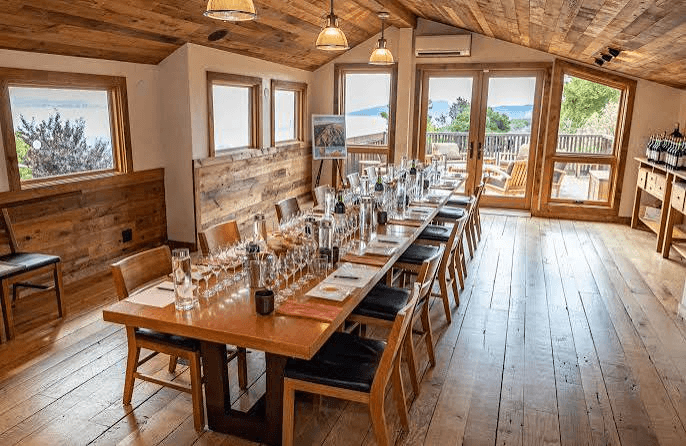
The estate’s oldest winery building dates to 1892, while the modern Ridge story began when four Stanford Research Institute engineers produced wine from the site in 1959.
Ridge describes its philosophy as relying on “nature and tradition rather than technology.” That principle appears in its use of native yeasts, relatively low-intervention cellar practices, and an unusually transparent approach to explaining what goes into each wine. The Monte Bello vineyard has been fully certified organic since the 2022 harvest.
This is a destination for travelers interested in serious wine without the theatrical luxury sometimes associated with California tasting rooms. The mountain road, historic facilities, and dramatic elevation make the journey feel like part of the experience.
Why it stands out:
Historic mountain vineyards, restrained winemaking, and one of America’s most respected Cabernet-producing sites.
- TABLAS CREEK VINEYARD — PASO ROBLES, CALIFORNIA
Tablas Creek represents a different side of California wine. Founded in 1989 by the Perrin family of Château de Beaucastel and the Haas family of Vineyard Brands, the estate helped establish Rhône grape varieties in Paso Robles. Its founders imported vine material from Beaucastel, including varieties that had not previously been available to California growers.
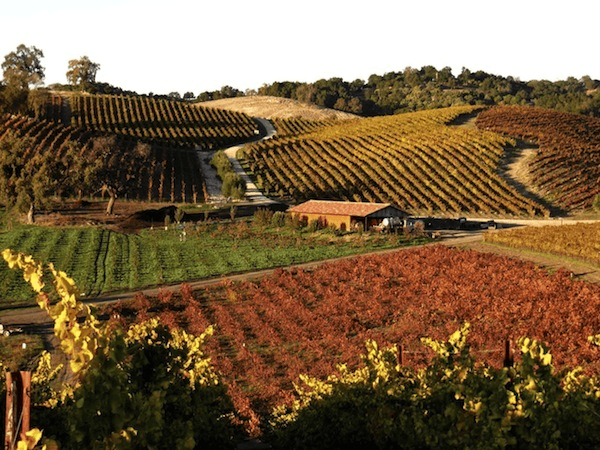
The winery has farmed organically since its beginning, earned organic certification in 2003, adopted Biodynamic practices, and became the world’s first Regenerative Organic Certified vineyard in 2020. Its estate includes a mobile grazing herd of sheep and alpacas, along with guard donkeys, cover crops, and extensive composting.
Tablas Creek translates the French concept of terroir as “somewhereness.” It is an unusually useful word for understanding the estate. This is not an attempt to reproduce France in California, but an effort to discover what Rhône varieties become in the limestone-rich hills west of Paso Robles.
Why it stands out:
Rhône-style wines, meaningful agricultural leadership, and one of the clearest examples of sustainability becoming part of the guest experience.
- KING ESTATE WINERY — EUGENE, OREGON
At the southern end of the Willamette Valley, King Estate operates on a scale that feels closer to a complete agricultural landscape than a conventional winery. Its certified Biodynamic acreage includes vineyards, woodlands, orchards, gardens, wetlands, lavender, and beehives.
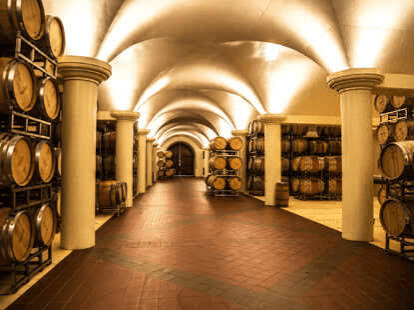
The winery was founded by the King family in 1991 and received Biodynamic certification in 2016 after years of certified organic farming. Visitors can combine estate-only wines with a culinary program built around the property’s gardens and agricultural output.
King Estate summarizes its approach with the line, “Wine begins with people and place.” The scale of the property makes that feel less like a slogan and more like the organizing idea behind the entire visit.
Why it stands out:
Biodynamic farming, estate dining, and a landscape that demonstrates how vineyards can function as part of a broader ecosystem.
- CHATEAU STE. MICHELLE — WOODINVILLE, WASHINGTON
Chateau Ste. Michelle helped establish Washington’s modern reputation as a wine-producing state. The brand was introduced in 1967 as Washington’s first premium winery label, and the Woodinville chateau opened in 1976.
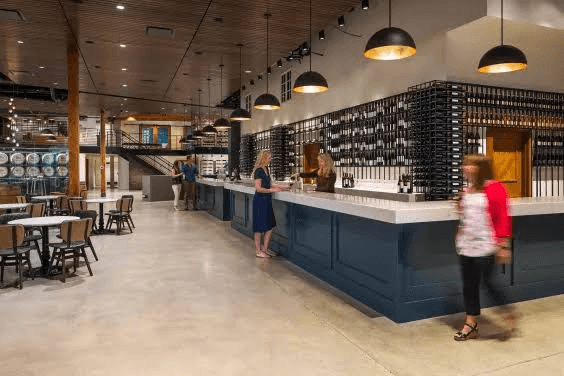
The winery has also hosted concerts since 1984, creating a long-running connection between wine, music, and large-scale hospitality.
Today, the destination occupies 105 wooded acres and offers guided tastings, food, private events, concerts, and evening programming. Its wines draw on vineyards east of the Cascade Mountains, while the visitor experience takes place near Seattle on the greener western side of the state.
The winery’s own description captures its leisurely appeal: “An hour here can easily become three.”
Why it stands out:
An accessible introduction to Washington wine, housed in a destination capable of supporting everything from focused tastings to concerts and major events.
THE EAST
- DR. KONSTANTIN FRANK WINERY — HAMMONDSPORT, NEW YORK
Few American wineries can tell a more consequential story than Dr. Konstantin Frank.
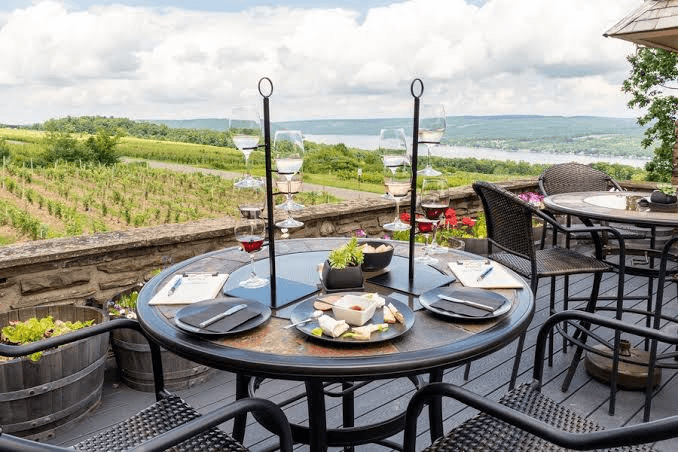
After immigrating to the United States, Frank challenged the belief that European grape varieties could not survive the winters of the eastern United States. On the slopes above Keuka Lake, he planted vinifera vines in the late 1950s and helped transform the future of Finger Lakes wine.
The winery remains family-operated across four generations and produces Riesling, Chardonnay, Pinot Noir, Grüner Veltliner, and traditional-method sparkling wines.
Its more immersive 1886 Wine Experience can include vineyard walks, cellar visits, barrel samples, sparkling-wine education, and seated pairings, depending on the day.
Its invitation to visitors, “Find Your Pioneering Spirit,” is particularly fitting. A visit here is not only about drinking Finger Lakes wine. It is about understanding how the region became capable of producing it.
Why it stands out:
An essential piece of American wine history, beautiful Keuka Lake scenery, and experiences that make wine education genuinely engaging.
- WÖLFFER ESTATE VINEYARD — SAGAPONACK, NEW YORK
Wölffer offers a more coastal, style-conscious expression of New York wine.
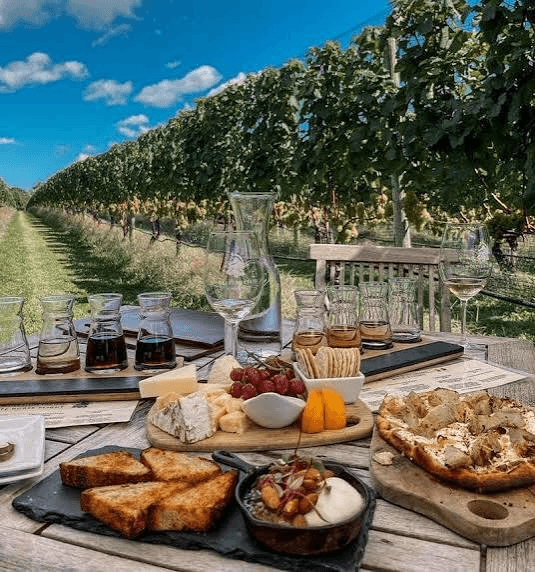
Founded in 1988, the estate includes a sustainably farmed vineyard within a larger Hamptons property that also features equestrian facilities. Atlantic breezes and maritime conditions help shape wines known particularly for freshness, acidity, and food-friendly character.
The visitor experience is split between the more structured Tasting Room and the casual Wine Stand, which welcomes guests for bottles, glasses, and sunset gatherings. The portfolio has also expanded beyond still wine into sparkling wine, cider, spirits, and no- or low-alcohol offerings.
Wölffer describes its identity through “quality, penchant for style, and celebration of place.” That combination explains its appeal. It feels unmistakably connected to the Hamptons without treating wine as a stiff or overly formal subject.
Why it stands out:
Coastal atmosphere, stylish hospitality, and one of the most recognizable expressions of modern Long Island wine culture.
- BARBOURSVILLE VINEYARDS — BARBOURSVILLE, VIRGINIA
Barboursville brings together Virginia history and Italian winemaking tradition.
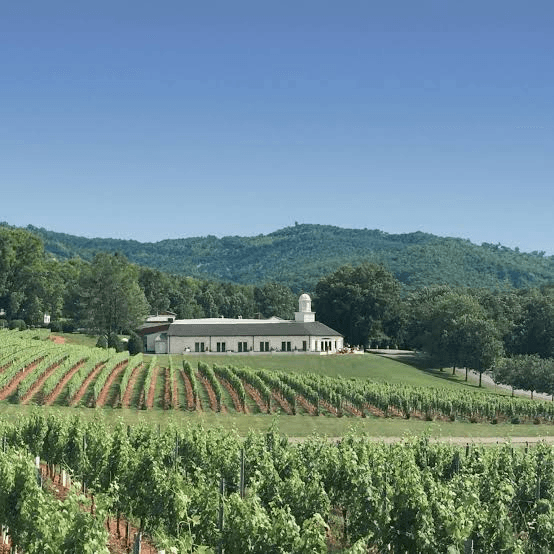
It was established in 1976 by Gianni Zonin, whose family’s winemaking history in Italy reaches back to the early 19th century. The estate occupies land once owned by Virginia Governor James Barbour and includes the ruins of a mansion designed by Thomas Jefferson.
Its signature wine, Octagon, helped establish the estate as an important producer within Virginia’s Monticello wine region.
Visitors can explore current releases in the main tasting room, discover older vintages through the Library 1821 experience, dine at Palladio Restaurant, and walk the grounds surrounding the historic ruins.
Barboursville is particularly compelling because the pieces reinforce one another. The Italian varieties, Jeffersonian architecture, food program, and Virginia landscape create a destination with a coherent sense of identity rather than a tasting room surrounded by decorative vines.
Why it stands out:
Historic architecture, Italian influence, library wines, and one of the most complete food-and-wine experiences in Virginia.
THE SOUTH AND SOUTHWEST
- DUCHMAN FAMILY WINERY — DRIFTWOOD, TEXAS
Duchman Family Winery makes an emphatic case for Texas-grown wine.
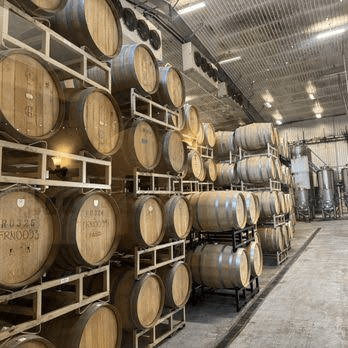
Its promise is direct: “100% Texas Grapes, 100% Texas Wine.”
The portfolio highlights varieties with Italian and Mediterranean associations, including Vermentino, Montepulciano, and Aglianico, which can be well suited to the state’s warmer growing conditions.
The winery sits on more than 40 acres in Driftwood, within the broader Texas Hill Country destination area. Guests can reserve tastings, arrange private tours, order wine by the glass or bottle, and settle beneath the property’s oak trees.
Duchman challenges two assumptions at once: that serious American wine must come from the coasts and that familiar French varieties are the only route to legitimacy. Its Italian-leaning portfolio helps Texas wine speak in its own accent.
Why it stands out:
Texas-grown Mediterranean varieties, relaxed Hill Country hospitality, and a property suited to tastings, picnics, and private gatherings.
- GRUET WINERY — ALBUQUERQUE AND SANTA FE, NEW MEXICO
Gruet’s story begins in Champagne but takes an unexpected American turn.
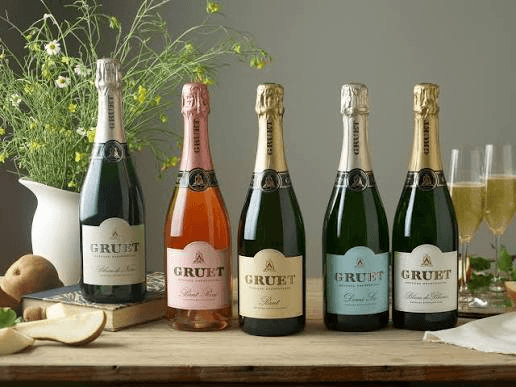
The Gruet family encountered vineyards in southern New Mexico in the early 1980s and planted Chardonnay and Pinot Noir near the town of Truth or Consequences. The first American Gruet sparkling wines were released from the 1987 vintage.
The winery uses the traditional sparkling-wine method and now draws fruit from New Mexico as well as partner sources in Washington and California, blending regions to balance ripe fruit with acidity.
Visitors can explore the wines through tasting rooms in Albuquerque and Santa Fe.
Its phrase, “French roots, American dreams,” neatly captures why Gruet belongs on a national list. It is not merely a French project transplanted to the desert. It is a distinctly American story of migration, experimentation, and reinvention.
Why it stands out:
Traditional-method sparkling wine, a surprising high-desert origin story, and an approachable alternative to better-known sparkling-wine regions.
THE MIDWEST
- STONE HILL WINERY — HERMANN, MISSOURI
Stone Hill is a reminder that American wine history did not begin in California.
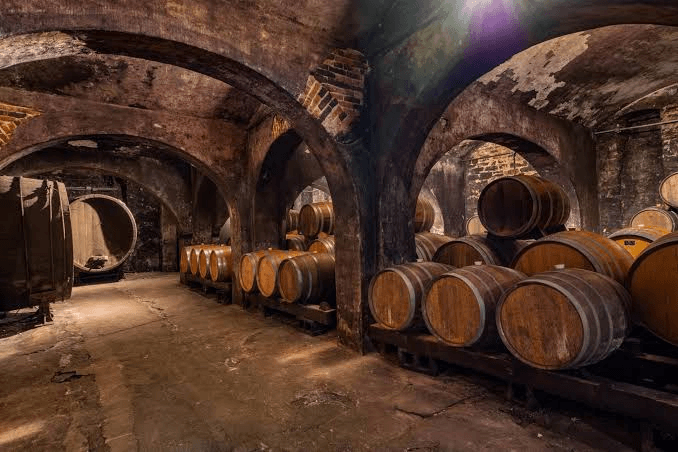
Founded by German immigrants in 1847, it became a major pre-Prohibition producer and won international recognition for wines made from American grapes, including Norton. Prohibition ended that first era, and the property remained dormant until Jim and Betty Held began restoring it in 1965.
The winery’s phrase, “Before there was Napa,” is provocative but historically meaningful. Missouri was once central to the American wine industry, and Stone Hill’s arched underground cellars preserve physical evidence of that forgotten period.
Visitors can tour the cellars, taste a range of dry and sweet wines, and eat German-inspired food at the estate restaurant.
This may be the most educationally surprising stop on the list. Even visitors who arrive skeptical of Missouri wine are likely to leave with a broader understanding of where American winemaking came from.
Why it stands out:
Pre-Prohibition history, enormous underground cellars, Norton, and a direct connection to Missouri’s German cultural heritage.
- BLACK STAR FARMS — SUTTONS BAY AND TRAVERSE CITY, MICHIGAN
Black Star Farms demonstrates how naturally wine fits into the broader travel culture of northern Michigan.
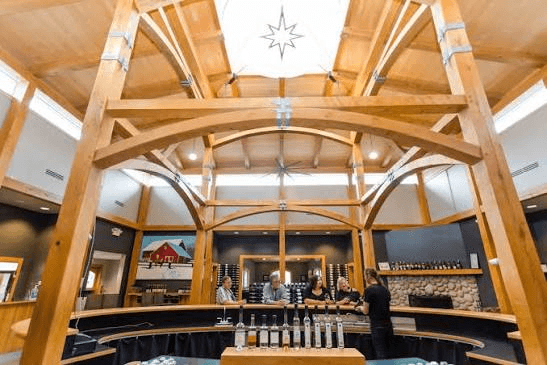
Its original 160-acre Suttons Bay estate sits near the Leelanau Peninsula, while a second tasting room provides access near Traverse City and the Old Mission Peninsula.
The Suttons Bay property combines a winery and distillery with an inn, culinary programming, an equestrian facility, and approximately three miles of trails.
Its wines draw attention to the cool-climate potential of northern Michigan, including Riesling, Chardonnay, Cabernet Franc, sparkling wines, and multiple expressions of Pinot Noir.
The estate calls itself “Your Northern Michigan Experience, Reimagined.” That is a fair description of a property where wine becomes one part of a larger stay built around food, landscape, and outdoor recreation.
Why it stands out:
A complete wine-country retreat and a persuasive introduction to one of America’s most underrated cool-climate regions.
AMERICAN WINE COUNTRY IS BIGGER THAN A SINGLE DESTINATION
The wineries on this list do not share one architectural style, one climate, or even one definition of what an American wine should taste like.
That is precisely the point.
Ridge protects the character of a high mountain vineyard. Tablas Creek treats regenerative agriculture as an essential part of wine quality. Dr. Konstantin Frank preserves the story of an immigrant who changed an entire region. Stone Hill connects modern visitors to a wine culture that flourished before Prohibition. Gruet makes traditional-method sparkling wine in a landscape that many travelers would never associate with vineyards.
The best winery trips are not only about finding the highest-rated bottle. They are about seeing how wine changes when it encounters a particular landscape, history, and community—and how hospitality can make those ideas understandable without making them intimidating.
Before traveling, confirm current hours, reservation requirements, age restrictions, tasting formats, and private-event closures directly with each winery. Experiences and availability can change seasonally.
BRINGING WINE-COUNTRY HOSPITALITY TO YOUR OWN EVENT
A memorable wine experience depends on more than what is poured.
Thoughtful pacing, knowledgeable service, attractive presentation, and a welcoming atmosphere can transform a simple tasting into an occasion.
Wild Bartenders helps bring that same spirit of hospitality to weddings, private parties, corporate gatherings, and special events. Contact our team to begin planning a bar experience built around your guests, your setting, and the way you want the celebration to feel.
Leave a Reply