The American craft beer movement was built on a simple idea: beer could be more flavorful, more distinctive, and more connected to the people and places responsible for making it.
Over the decades, that idea has produced far more than an expanding selection of IPAs. American brewers have revived Belgian traditions, built new regional beer styles, experimented with wild fermentation, helped reshape farming and sustainability practices, and transformed industrial buildings, rural properties, and former agricultural land into places where people gather.
Some breweries are worth visiting because of their history. Others offer beers that are difficult to experience anywhere else. The strongest destinations combine both with thoughtful food, memorable surroundings, educational tours, live events, and hospitality that welcomes visitors who may not know the difference between a lager and a lambic.
The breweries below are not ranked against one another. Each was selected because it represents a distinctive chapter in American beer culture and offers a visitor experience capable of becoming more than a quick stop for a flight.
THE WEST
- SIERRA NEVADA BREWING CO. — CHICO, CALIFORNIA
Few breweries have influenced modern American beer as deeply as Sierra Nevada.
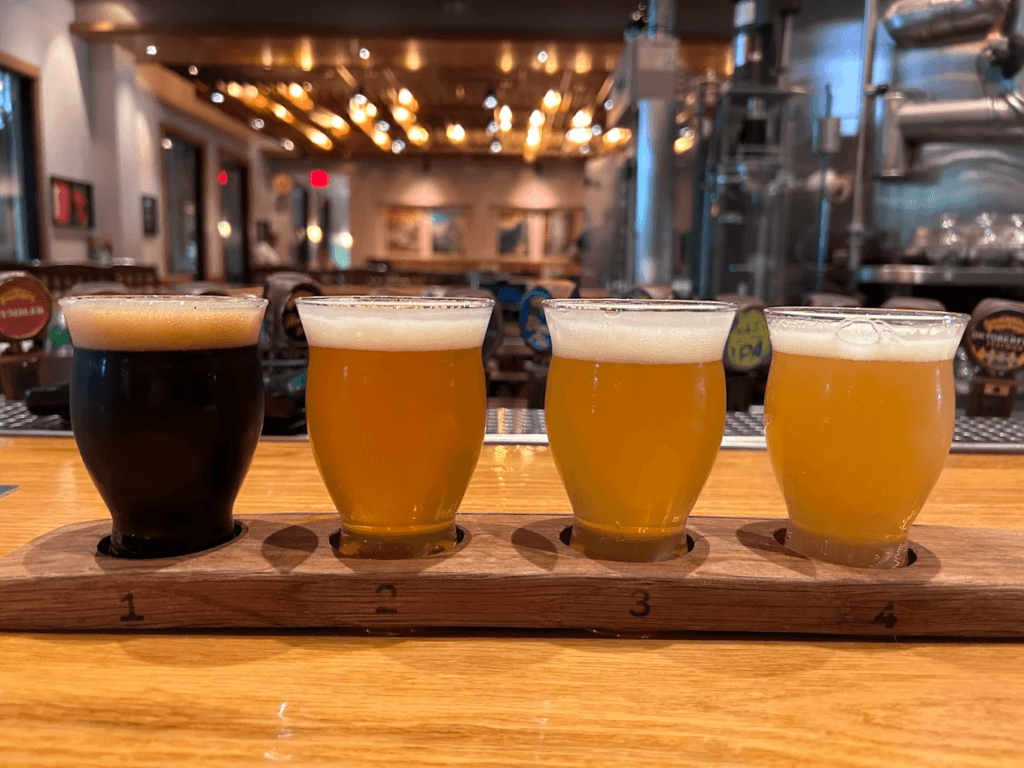
Founder Ken Grossman began brewing commercially in Chico in 1980, during a period when intensely flavored American beer remained difficult to find. Sierra Nevada Pale Ale used Cascade hops to deliver pine, citrus, and bitterness in a way that helped introduce drinkers to what American hops could accomplish.
The Chico brewery remains more than a monument to that history. Visitors can experience a working production facility, explore guided tours, eat at the Taproom, and see how brewing intersects with agriculture and environmental planning.
Sierra Nevada maintains organic gardens and agricultural plots while also investing in solar power, energy recovery, composting, spent-grain partnerships, and waste diversion. Those systems could have remained invisible behind the scenes. Instead, the brewery incorporates them into tours that help visitors understand the resources required to produce a glass of beer.
The company summarizes that outlook with a straightforward statement: “It matters how a business operates.”
That philosophy gives the Chico experience unusual depth. Visitors can appreciate the beer that helped define an era while also seeing how a major production brewery attempts to manage its environmental footprint.
Why it stands out:
Foundational American pale ale, deep craft beer history, extensive tours, a full food program, and sustainability practices that become part of the visitor experience.
- RUSSIAN RIVER BREWING COMPANY — WINDSOR, CALIFORNIA
Russian River occupies an unusual position in American beer. It is famous for hop-forward beers such as Pliny the Elder, but it has also built an influential program around barrel aging, mixed fermentation, sour beer, and spontaneous fermentation.
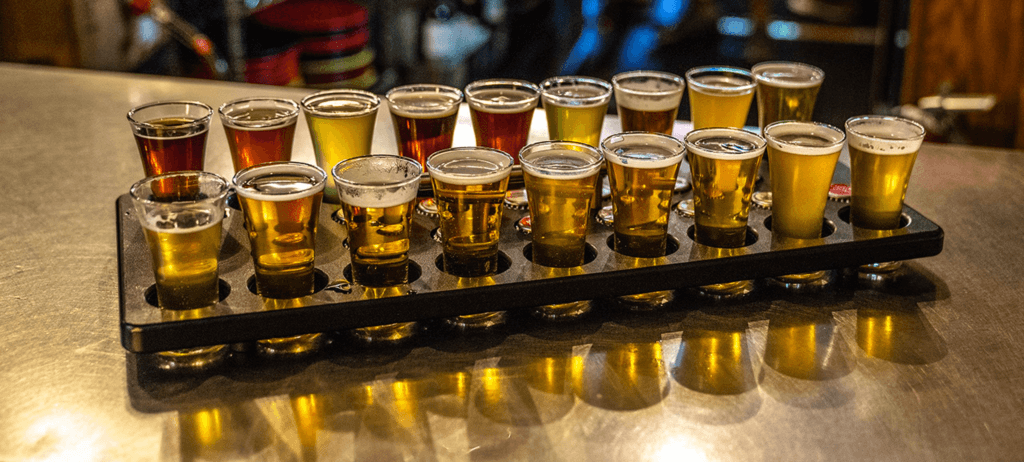
The brewery’s modern story is closely associated with Vinnie and Natalie Cilurzo. In 2003, the Korbel Champagne Cellars transferred the Russian River name, beer names, and recipes to the couple, allowing them to continue developing the brewery independently.
Its Windsor campus, which opened in 2018, substantially expanded what a Russian River visit could offer. The large facility includes separate production areas for clean and sour beers, a brewhouse, barrel-aging operations, a brewpub, an outdoor beer garden, event spaces, a gift shop, and both guided and self-guided tours.
One of the tour’s most interesting stops is the koelschip, a broad, shallow vessel that allows hot wort to cool while interacting with microorganisms in the surrounding environment. It offers a physical demonstration of how traditional fermentation methods can coexist with the precision and scale of a modern production brewery.
Russian River also rewards visitors who arrive interested in more than one celebrated IPA. Its broader portfolio demonstrates how bitterness, malt, oak, fruit, acidity, yeast, and time can create radically different expressions of beer under one roof.
Why it stands out:
Internationally recognized IPAs, an ambitious sour and barrel program, an educational production tour, and a campus designed to accommodate both serious beer exploration and a relaxed afternoon.
- PFRIEM FAMILY BREWERS — HOOD RIVER, OREGON
Some brewery destinations are memorable because the beer and landscape feel inseparable. pFriem Family Brewers is one of them.
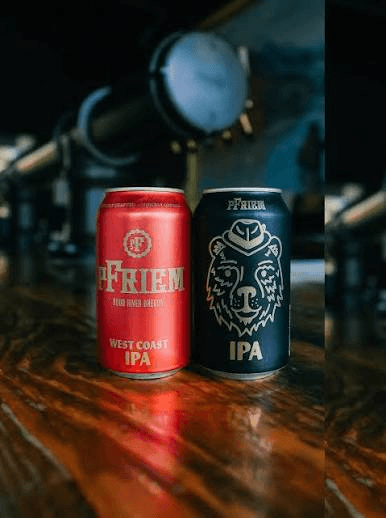
Its Hood River tasting room sits near the Columbia River, surrounded by the dramatic geography of the Columbia River Gorge. The brewery describes the location as the place where “world-class beer meets stunning Gorge views,” and the setting delivers on that promise.
The brewery’s identity draws heavily from European traditions, particularly Belgian brewing, while remaining rooted in the Pacific Northwest. Its portfolio moves easily among Belgian-style ales, pilsners, lagers, hop-forward beers, strong ales, and ambitious barrel-aged releases.
That range makes pFriem particularly useful for groups whose members do not all want the same kind of beer. One guest can explore fermentation-driven Belgian styles while another chooses a crisp lager or a more familiar Northwest IPA.
The Hood River tasting room also treats food as more than an afterthought. Its menu uses ingredients from regional producers and is designed around pairing beer with complete meals rather than simply providing snacks between rounds.
The combination of beer, food, waterfront access, and Gorge scenery makes pFriem an ideal stop within a larger Pacific Northwest trip. It can serve as a destination on its own or as the relaxed conclusion to a day of hiking, windsurfing, sightseeing, or driving through the Columbia River Gorge.
Why it stands out:
European brewing influence, Pacific Northwest character, a serious food program, rotating beer selections, and one of the most naturally beautiful brewery settings in the country.
THE MOUNTAIN WEST
- NEW BELGIUM BREWING — FORT COLLINS, COLORADO
New Belgium’s origin story begins far from a commercial brewhouse.
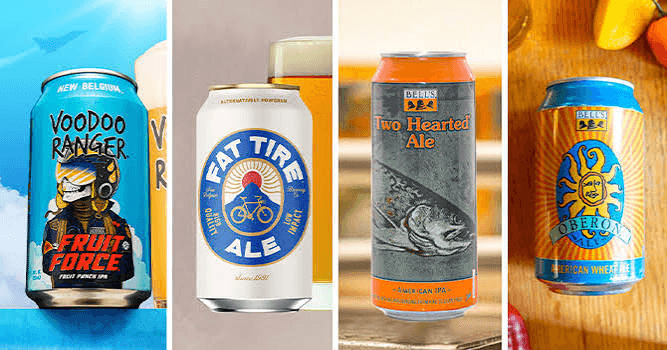
A bicycle trip through Belgium inspired co-founders Kim Jordan and Jeff Lebesch to bring elements of Belgian brewing culture home to Fort Collins. Brewing began in the basement of their Colorado home in 1991, where early batches included Fat Tire Amber Ale and a Belgian-style dubbel called Abbey.
The brewery still describes its identity with the line, “We were born on a bike.”
That connection to cycling has remained part of New Belgium’s culture, branding, and public events, but the Fort Collins brewery also tells a larger story about how a small operation can grow into a nationally recognized producer.
Its production tour takes guests into working brewery spaces and explains the brewing process at a scale most people never see. The experience includes substantial walking, production equipment, beer samples, and one of the more playful brewery-tour traditions in the country: a ride down the facility’s slide.
Outside the tour, the Fort Collins campus functions as a community gathering place with outdoor seating, food trucks, live music, games, private events, and a frequently changing calendar of public programming.
New Belgium is a particularly strong stop for travelers who want an accessible introduction to commercial brewing. The atmosphere is energetic and informal, while the production tour provides enough scale and technical detail to remain interesting to experienced beer drinkers.
Why it stands out:
A memorable cycling-inspired history, Belgian roots, large-scale production tours, community programming, and one of America’s most recognizable brewery campuses.
THE SOUTH
- JESTER KING BREWERY — AUSTIN, TEXAS
Jester King does not feel like a conventional brewery with a patio attached. It feels like a working Texas Hill Country property that happens to produce some of the country’s most distinctive beer.
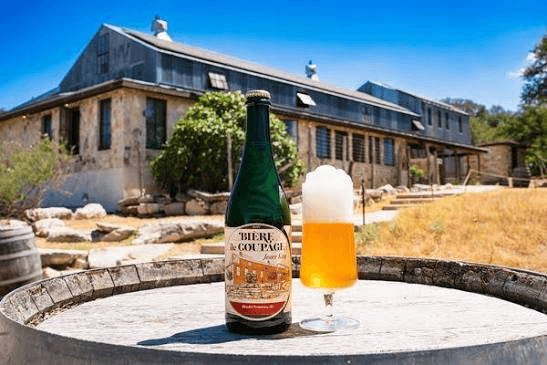
Located on a large ranch outside Austin, Jester King makes farmhouse ales, barrel-aged wild ales, lagers, IPAs, and fruit beers. Its traditional farmhouse releases can incorporate well water, Texas-grown grain, local ingredients, and a house fermentation culture that helps give the beers their individual character.
The brewery’s own description gets directly to the point: “Beer, Pizza, & Goats in the Beautiful Texas Hill Country.”
That is not marketing shorthand. Guests can drink beer, eat wood-fired pizza, explore the property, attend a brewery tour, learn about its agricultural work, and participate in scheduled experiences with the ranch’s Nigerian Dwarf goats.
Those elements are connected by a broader philosophy. Jester King draws inspiration from European farmhouse breweries that historically produced beer as part of an agricultural environment rather than as a completely separate industrial activity.
The ranch setting also encourages visitors to slow down. A tasting can become a meal, a walk, a conversation about fermentation, or an afternoon spent listening to music while looking across the Hill Country landscape.
For travelers who primarily associate Texas beer with clean lagers or aggressive IPAs, Jester King reveals a different regional possibility: dry farmhouse beer, native fermentation, patient barrel aging, and ingredients shaped by the land around the brewery.
Why it stands out:
Farmhouse and wild fermentation, Texas ingredients, wood-fired pizza, agricultural experiences, goats, tours, and a rural environment unlike almost any other American brewery.
- HIGHLAND BREWING — ASHEVILLE, NORTH CAROLINA
Asheville is now recognized as one of America’s leading beer cities, but that identity had to begin somewhere.
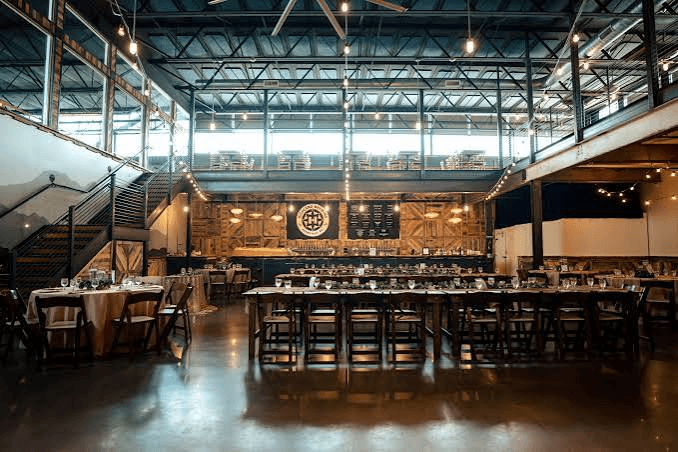
Highland Brewing opened in 1994 and is widely presented as Asheville’s original craft brewery. Its founder, Oscar Wong, helped establish a local brewing culture that eventually expanded into one of the densest and most varied brewery communities in the United States.
Today, Highland’s 40-acre property offers considerably more than a taproom. The campus includes its main production brewery, an innovation brewhouse, indoor and outdoor gathering spaces, event facilities, trails, a large meadow, live music, food options, sand volleyball, and an 18-hole disc golf course.
The brewery’s official tour invites guests to “sip your way around Asheville’s first brewery.” Along the route, visitors can see production areas, learn about the company’s role in Asheville’s development, examine large murals by regional artists, and sample beers connected to different periods in Highland’s history.
Highland is especially well suited to mixed groups. Dedicated beer travelers can explore the brewery’s history and small-batch releases, while other visitors can enjoy music, food, outdoor recreation, or the broader campus.
That balance makes Highland more than an important historical stop. It demonstrates how a brewery can function as public green space, concert venue, recreational property, event venue, and neighborhood gathering place without losing its connection to beer.
Why it stands out:
A central place in Asheville beer history, a spacious outdoor campus, production tours, live entertainment, recreation, art, and a welcoming environment for groups.
THE EAST
- ALLAGASH BREWING COMPANY — PORTLAND, MAINE
When Rob Tod founded Allagash Brewing Company in 1995, the operation consisted of one employee, a small space in the corner of a warehouse, and one Belgian-style wheat beer.
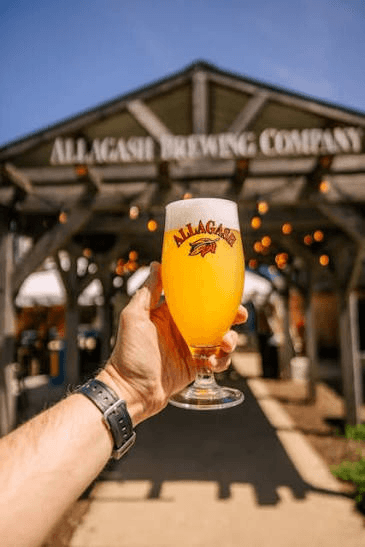
That beer was Allagash White.
At the time, its haze, citrus character, spices, and Belgian yeast profile were unfamiliar to many American bar owners and beer drinkers. Allagash continued producing it anyway, helping create a larger American audience for Belgian-inspired brewing.
The Portland brewery still occupies the same general property where it began, although the operation and visitor experience have expanded considerably. Guests can drink at the flagship tasting room, take guided brewery tours, explore specialty beer and barrel experiences, enjoy food from Bite Into Maine, and spend time in outdoor areas designed for groups and families.
Allagash has also become important to the American revival of spontaneous fermentation. Its coolship program adapts methods associated with traditional Belgian lambic production, allowing wort to cool in a broad vessel before fermenting and aging in barrels.
The resulting visit bridges approachable and highly specialized beer. Someone new to craft beer can enjoy a glass of Allagash White, while an experienced drinker can explore barrel-aged, bottle-conditioned, and spontaneously fermented releases.
The brewery explicitly tells guests, “All are welcome.” That sense of openness matters because Belgian beer can sometimes be presented as an intimidating subject. Allagash makes its history and techniques accessible without flattening their complexity.
Why it stands out:
Belgian-inspired brewing, one of America’s most recognizable wheat beers, coolship fermentation, thoughtful tours, Maine food, outdoor space, and genuinely welcoming hospitality.
- DOGFISH HEAD CRAFT BREWERY — MILTON AND REHOBOTH BEACH, DELAWARE
Dogfish Head helped make experimentation one of the defining values of American craft beer.
The company began in 1995 with a small brewpub in Rehoboth Beach. From its earliest years, founder Sam Calagione built the brewery around unusual ingredients, historical research, culinary inspiration, music, and beers that did not fit neatly into existing categories.
Dogfish Head still refers to its Milton brewery as the “hub of off-centered goodness.”
Visitors can choose from several tour formats, ranging from shorter introductions to more extensive experiences that explore the company’s large brewhouse, research-and-development system, packaging operations, barrel areas, and distilling work.
The property also contains one of the strangest landmarks in American brewing: a large Steampunk Treehouse originally created as an art installation and later relocated to the brewery.
The Milton location offers food, tastings, games, shopping, and events, but the broader Dogfish experience extends across coastal Delaware. Travelers can also visit the original Brewings & Eats in Rehoboth Beach, dine at the company’s seafood-focused restaurant, or stay at the Dogfish Inn in nearby Lewes.
That network of destinations allows visitors to experience the brand as more than a brewery tour. Beer, spirits, food, lodging, beaches, music, and coastal travel become part of a single itinerary.
Why it stands out:
Decades of brewing experimentation, multiple tour options, unusual visual landmarks, food and spirits, and an entire coastal Delaware experience built around the brewery’s personality.
- BREWERY OMMEGANG — COOPERSTOWN, NEW YORK
Brewery Ommegang brought Belgian farmstead brewing to an unlikely but remarkably suitable American setting.
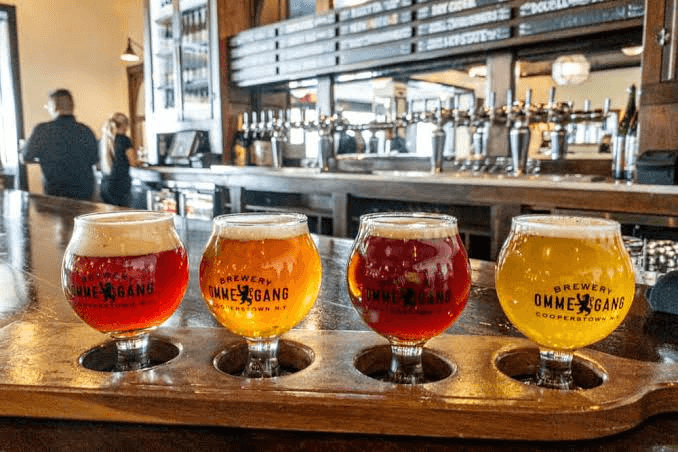
The brewery was developed during the 1990s on a former hop farm outside Cooperstown, in a region of New York once known as Nova Belgium. Its founders worked with established Belgian breweries to create an American operation devoted to Belgian-style beer.
Early releases such as Ommegang Abbey Ale, Hennepin, Rare Vos, and Three Philosophers helped demonstrate that American breweries could engage seriously with dubbels, saisons, quadrupels, bottle conditioning, spices, dark fruit, and expressive Belgian yeast.
The property’s slogan—“Where Heaven Met Earth…and Stayed Awhile”—captures the theatrical charm of the setting.
Visitors can explore the Tap House, café, mercantile shop, guided tastings, weekend brewery tours, private events, and an outdoor calendar that can include live music, fire-pit gatherings, and major concerts.
Ommegang’s rural property makes it feel removed from the pace of a typical taproom. The brewery’s architecture, green surroundings, food, strong ales, and connection to Belgian history encourage a slower, more deliberate kind of visit.
Its Cooperstown location also makes it easy to build a wider trip around the brewery. Baseball history, museums, lakes, small-town lodging, and the surrounding countryside provide reasons to stay in the area rather than treating the brewery as an isolated stop.
Why it stands out:
Belgian-style brewing, a rural farmstead setting, guided tastings, food, concerts, and one of the most cohesive destination experiences in New York beer.
- THE ALCHEMIST — STOWE, VERMONT
For many beer travelers, The Alchemist is inseparable from Heady Topper.
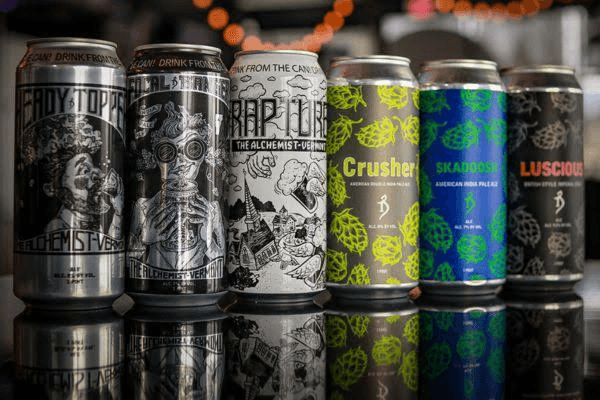
The intensely aromatic, unfiltered double IPA became one of the defining beers of the modern American IPA movement. Its scarcity and strong connection to Vermont turned a can of beer into a reason for drinkers to plan entire trips through the state.
The family-run company now operates breweries in Waterbury and Stowe, while the Stowe location serves as its main public destination.
The brewery describes its specialty simply: “fresh, unfiltered IPAs.”
That focus is visible in beers such as Heady Topper and Focal Banger, but the Stowe experience is broader than purchasing sought-after cans. The property includes a Beer Café, outdoor gathering areas, retail space, food service on scheduled days, live events, and guided brewery tours.
The tours are intentionally small, giving visitors a close look at the brewing process rather than moving them through the facility in a large crowd. The experience also connects beer tourism to the brewery’s local philanthropic work through the Alchemist Foundation.
Stowe itself adds substantially to the appeal. Mountain scenery, hiking, skiing, fall foliage, restaurants, and other Vermont breweries make The Alchemist an easy centerpiece for a larger regional trip.
Why it stands out:
A landmark place in American IPA history, highly recognizable beers, small-group tours, a mountain-town setting, and a visit that fits naturally into a wider Vermont itinerary.
THE MIDWEST
- BELL’S BREWERY — KALAMAZOO AND COMSTOCK, MICHIGAN
Bell’s offers visitors the rare opportunity to experience both the small-scale origins and the industrial growth of a major American brewery.
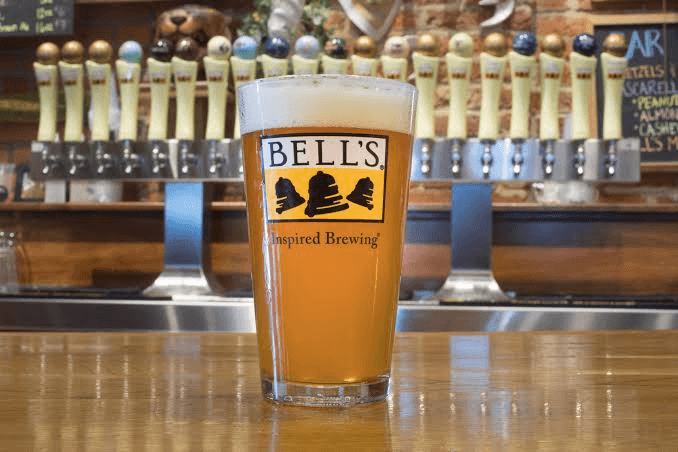
The company’s first commercial batch was brewed in downtown Kalamazoo in 1985 using a 15-gallon soup pot. The downtown brewing system later expanded, producing early versions of beers that would become central to the Bell’s identity, including Two Hearted Ale and Oberon Ale.
That original campus remains active and is shared with the Eccentric Café and General Store. Downtown tours focus on where the company began, allowing guests to see a much smaller brewing system and connect the current brewery to its homebrewing roots.
Visitors interested in large-scale production can explore the separate Comstock brewery. Behind-the-scenes tours can include brewhouses, packaging equipment, yeast operations, barrel storage, and innovation brewing systems.
The two locations show different ends of the same story. Kalamazoo preserves the intimacy and improvisation of the early craft beer movement, while Comstock demonstrates the engineering required to produce widely distributed beer consistently.
The Eccentric Café adds another layer through food, specialty beers, a beer garden, concerts, and public events. It gives Bell’s a social and cultural center rather than leaving the original brewery as a static historical site.
Why it stands out:
Visible homebrewing roots, two very different brewery-tour experiences, iconic Michigan beers, a longstanding café, live events, and a clear picture of how American craft brewing grew.
AMERICAN BEER IS A STORY OF PLACE
No single beer style unites these destinations.
Sierra Nevada helped establish the character of American pale ale. Russian River built a reputation around both hops and fermentation. Allagash and Ommegang drew from Belgian traditions. Jester King tied farmhouse brewing to Texas agriculture. The Alchemist helped redefine the possibilities of American IPA. Highland became part of the cultural foundation of an entire beer city.
What connects them is a belief that beer can communicate something about its maker and surroundings.
A meaningful brewery visit allows guests to see that connection directly. Water, grain, hops, yeast, equipment, architecture, food, climate, local history, and community all shape what eventually reaches the glass.
The strongest destinations also understand that hospitality is not separate from the beer. A clear explanation from a tour guide, a well-designed tasting, a thoughtfully paired meal, a comfortable gathering space, or a welcoming bartender can change how someone understands what they are drinking.
Before making travel plans, check each brewery’s current website for operating hours, tour schedules, reservation requirements, age restrictions, food availability, private closures, and seasonal events. Brewery experiences can change throughout the year.
BRINGING CRAFT BEER HOSPITALITY TO YOUR OWN EVENT
A great craft beer experience is not created by filling a cooler with as many different cans as possible.
The selection should make sense for the guests. Beers should be stored and served properly. Glassware, pouring technique, pacing, menu balance, presentation, and knowledgeable service all influence whether guests feel invited to explore or overwhelmed by unfamiliar choices.
Wild Bartenders provides professional bar service for weddings, private parties, corporate gatherings, tastings, and special events. Whether your menu is built around local craft beer, classic cocktails, wine, or a complete bar program, our team can help create a polished experience suited to your guests and celebration.
Contact Wild Bartenders to begin planning a bar experience that is organized, welcoming, and memorable from the first pour to the final toast.
Leave a Reply